 Skip to content
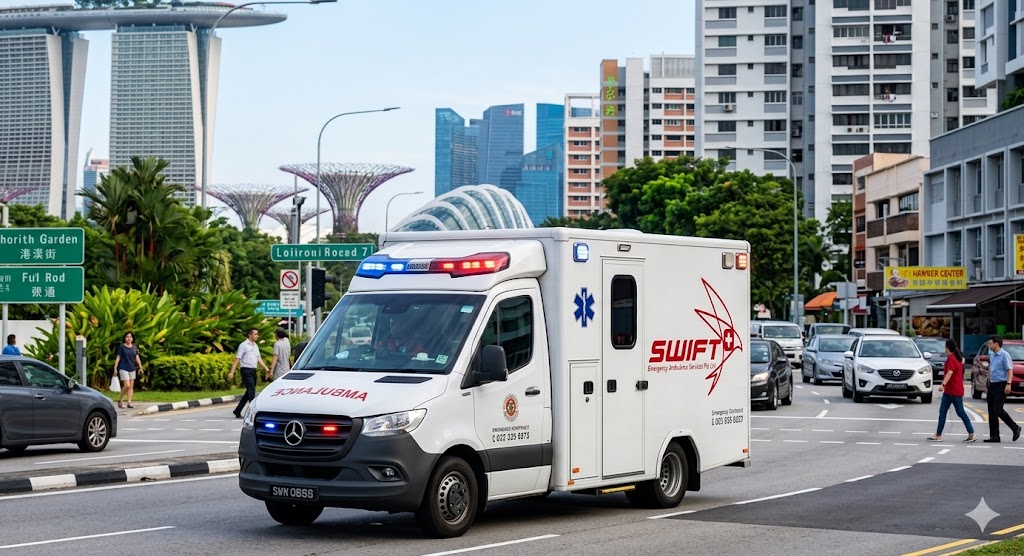
In a medical crisis, every second carries weight. Whether it is a cardiac arrest in a crowded MRT station, a severe road accident on an expressway, or a sudden stroke at home, the availability of a fast and fully equipped emergency ambulance can mean the difference between life, permanent disability, or death. In a high-density, fast-moving city like Singapore, emergency medical response is not just a service it is a critical public safety infrastructure that protects millions of lives every day.
Modern emergency ambulance services are no longer simple transport vehicles. They function as mobile intensive care units staffed by trained paramedics, equipped with advanced life-support technology, and connected digitally to hospital emergency departments. Companies such as Swift Ambulance play an essential role in strengthening Singapore’s pre-hospital care ecosystem by delivering rapid, professional, and medically supervised transport when time is the most precious resource.
This comprehensive guide explores what an emergency ambulance is, how it operates, why it is vital, the types of emergency ambulances available, and what patients and families should expect when calling for urgent medical transport in Singapore.
What Is an Emergency Ambulance?
An emergency ambulance is a specially designed medical vehicle equipped to provide immediate life-saving care and rapid transportation to a hospital during critical health events. Unlike non-emergency medical transport, emergency ambulances are activated when there is a high risk to life, organ function, or neurological outcomes.
Key characteristics of an emergency ambulance include:
- Advanced Life Support (ALS) equipment
- Certified paramedics and emergency medical technicians (EMTs)
- Real-time communication with hospital emergency departments
- Priority road access using sirens and traffic signal pre-emption
- Strict clinical protocols for trauma, cardiac, respiratory, and neurological emergencies
In Singapore’s tightly regulated healthcare environment, emergency ambulances must comply with Ministry of Health (MOH) standards, ensuring consistent quality, safety, and medical readiness.
Why Emergency Ambulance Services Are Critical in Singapore
Singapore has one of the world’s most advanced healthcare systems, but outcomes in critical cases depend heavily on the “golden hour”—the first 60 minutes after a severe injury or medical event.
An efficient emergency ambulance system ensures:
- Rapid Response Time
Immediate dispatch reduces delays in cardiac arrest, stroke, and major trauma cases. - Pre-Hospital Advanced Care
Early defibrillation, oxygen therapy, airway management, and drug administration significantly improve survival rates. - Direct Hospital Coordination
Ambulance teams alert emergency departments in advance, allowing trauma teams and cath labs to be pre-activated. - Safe Patient Transfer
Continuous monitoring prevents deterioration during transport.
For a densely populated, ageing society like Singapore, the demand for high-performance emergency ambulance services is increasing every year.
Types of Emergency Ambulance Services
1. Basic Life Support (BLS) Ambulance
Designed for patients who need urgent transport but do not require invasive procedures. Equipped with:
- Oxygen systems
- Automated External Defibrillators (AEDs)
- Basic airway tools
- Trauma immobilisation equipment
2. Advanced Life Support (ALS) Ambulance
Staffed by advanced paramedics capable of performing:
- Endotracheal intubation
- Cardiac drug administration
- Manual defibrillation
- Continuous ECG monitoring
ALS units function as mobile emergency rooms and are standard for high-risk cases.
3. Cardiac Ambulance
Specially configured for heart attack and arrhythmia patients with:
- 12-lead ECG transmission
- Thrombolytic therapy support
- Direct routing to cardiac catheterisation labs
4. Neonatal and Paediatric Emergency Ambulance
Designed for critically ill newborns and children, equipped with:
- Neonatal ventilators
- Incubators
- Paediatric drug dosing systems
Core Components of a Modern Emergency Ambulance
A professionally operated emergency ambulance such as those deployed by Swift Ambulance typically includes:
Medical Equipment
- Portable ventilators
- Multi-parameter monitors
- Infusion pumps
- Suction units
- Emergency drug kits
- Trauma and spinal immobilisation devices
Digital Connectivity
- GPS-based fleet tracking
- Live patient data transmission
- Hospital pre-notification systems
Clinical Team
- Registered paramedics
- Emergency care nurses
- Drivers trained in defensive and priority driving
How Emergency Ambulance Response Works in Real Life
Scenario: Sudden Cardiac Arrest at Home
- Emergency call is placed.
- Nearest emergency ambulance is dispatched using GPS optimisation.
- Paramedics arrive within minutes.
- CPR and defibrillation begin immediately.
- Patient is stabilised and connected to a cardiac monitor.
- Hospital cardiac team is alerted en route.
- Direct transfer to emergency department or cath lab.
This seamless chain of survival significantly increases the chance of full neurological recovery.
Benefits of Professional Emergency Ambulance Services
- Faster clinical intervention
- Reduced mortality in trauma and cardiac cases
- Safe inter-hospital transfers for critical patients
- Continuous monitoring during transport
- Regulatory compliance and medical accountability
For private hospitals, corporate medical coverage, and international patients, accredited private providers like Swift Ambulance offer additional advantages, including shorter waiting times and customised medical escort services.
Current Trends in Emergency Ambulance Care
1. Smart Ambulance Technology
AI-assisted triage, real-time vital analytics, and predictive traffic routing are now improving response times.
2. Telemedicine Integration
Doctors can remotely guide paramedics during complex resuscitation.
3. Community First Responder Networks
Mobile apps alert trained volunteers to begin CPR before the emergency ambulance arrives.
4. Electric Ambulance Fleets
Sustainable, low-noise emergency vehicles are being piloted in urban areas.
When Should You Call an Emergency Ambulance?
Call immediately for:
- Chest pain or suspected heart attack
- Stroke symptoms (face drooping, speech difficulty, limb weakness)
- Severe trauma or bleeding
- Unconsciousness or seizures
- Breathing difficulties
- Major burns
- High-risk pregnancy emergencies
Delaying professional medical transport can lead to irreversible damage.
Frequently Asked Questions (FAQs)
Is an emergency ambulance different from a regular ambulance?
Yes. An emergency ambulance provides advanced life-saving interventions, while non-emergency ambulances focus mainly on transport.
Can private providers like Swift Ambulance handle critical cases?
Licensed private operators with ALS capability are fully equipped to manage life-threatening emergencies and inter-hospital critical transfers.
Are emergency ambulances connected to hospitals in real time?
Yes. Vital signs and case details are often transmitted before arrival, enabling immediate treatment on entry.
How fast do emergency ambulances respond in Singapore?
Urban response times are among the fastest in Asia, often within minutes, depending on location and traffic.
The Future of Emergency Ambulance Services
Singapore is moving toward a fully integrated smart emergency medical system where ambulances, hospitals, and community responders operate as a single digital network. Predictive analytics, drone-assisted AED delivery, and AI-powered triage will further shorten treatment timelines and enhance survival rates.
Conclusion
An emergency ambulance is far more than a vehicle it is a mobile life-saving platform, a clinical command centre, and a vital link in Singapore’s emergency care chain. From advanced cardiac support to trauma stabilisation and neonatal transport, these services deliver immediate, expert care when every second matters.
For individuals, families, healthcare institutions, and corporate organisations, partnering with a trusted provider like Swift Ambulance ensures access to fast, professional, and medically advanced emergency response when it is needed most.
Understanding how emergency ambulance services work empowers you to act decisively in critical moments and reinforces the value of preparedness in a modern, high-performance healthcare system.


