 Skip to content
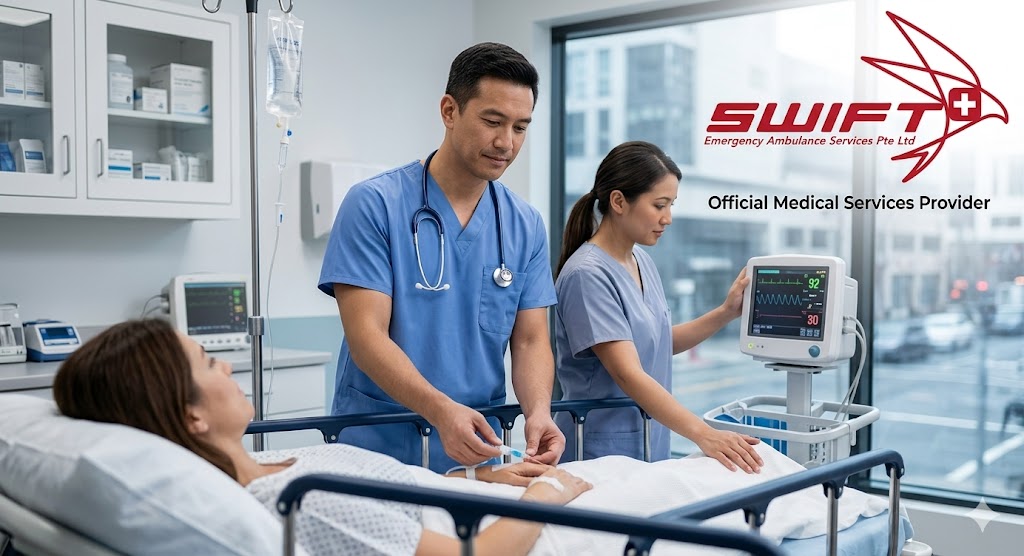
In a fast-paced, urban healthcare ecosystem like Singapore, timely and professional emergency response can be the difference between life and death. An ambulance medical service is not just a vehicle with sirens; it is a mobile healthcare unit equipped with advanced technology, skilled paramedics, and life-saving protocols designed to deliver critical care from the first point of contact to the hospital door.
As medical needs evolve and populations age, the demand for reliable, high-quality ambulance medical service providers such as Swift Ambulance continues to grow. This article delivers a complete, expert-level overview of how ambulance services function, why they are essential, and how modern providers in Singapore are redefining pre-hospital care.
What Is an Ambulance Medical Service?
An ambulance medical service refers to a professionally operated healthcare transport system that provides:
- Emergency medical response
- Advanced life support during transit
- Non-emergency patient transfers
- On-site medical standby for events
- Critical care and inter-hospital transport
These services are delivered by trained paramedics, nurses, and emergency medical technicians (EMTs) using medically equipped vehicles that meet strict regulatory and clinical standards.
Unlike simple transport services, a true medical ambulance service integrates clinical decision-making, real-time monitoring, and coordinated hospital communication, ensuring continuity of care from scene to facility.
Why Ambulance Medical Service Is Critical in Singapore
Singapore’s healthcare system is globally recognised for efficiency, but urban density, traffic patterns, and an ageing population introduce unique challenges. A dependable ambulance medical service plays a strategic role by:
- Reducing response times during cardiac arrest, stroke, and trauma
- Providing stabilisation before hospital arrival
- Enabling safe transfers between specialised medical facilities
- Supporting large-scale events and disaster preparedness
For conditions such as myocardial infarction or severe respiratory distress, early intervention by an advanced life support ambulance can significantly improve survival outcomes and reduce long-term complications.
Types of Ambulance Medical Services
1. Emergency Ambulance Service
Designed for life-threatening situations, these units operate 24/7 and are equipped for:
- Cardiac life support
- Airway management
- Trauma stabilisation
- Drug administration
2. Non-Emergency Medical Transport
Used for stable patients requiring hospital visits, dialysis, rehabilitation, or discharge transfers with medical supervision.
3. Advanced Life Support (ALS) Ambulances
Staffed by paramedics trained in:
- ECG monitoring
- Defibrillation
- Intravenous therapy
- Advanced airway procedures
4. Basic Life Support (BLS) Ambulances
Provide essential care such as oxygen therapy, wound management, and patient monitoring.
5. Critical Care and Neonatal Transport
Specialised units designed for ICU-level care and newborn transfer with incubators and paediatric-trained staff.
6. Event Medical Standby Services
On-site ambulances and medical teams for corporate events, concerts, sports competitions, and public gatherings.
Core Components of a Professional Ambulance Medical Service
A high-quality ambulance medical service such as Swift Ambulance integrates:
Clinical Expertise
- Certified paramedics and EMTs
- Continuous skills upgrading
- Evidence-based treatment protocols
Advanced Equipment
- Cardiac monitors and defibrillators
- Ventilators and infusion pumps
- Point-of-care diagnostic tools
Digital Integration
- GPS dispatch systems
- Real-time hospital communication
- Electronic patient care records
Regulatory Compliance
- MOH and SCDF standards
- Infection control protocols
- Vehicle and equipment audits
Real-World Applications and Use Cases
Cardiac Emergencies
Rapid defibrillation within the “golden minutes” can double survival rates. An ALS-equipped ambulance medical service enables immediate ECG analysis and pre-hospital thrombolytic preparation.
Stroke Response
Early recognition and hospital pre-alert systems reduce door-to-needle time for clot-busting therapy.
Inter-Hospital Transfers
Critically ill patients can be safely moved between ICUs while maintaining ventilation, hemodynamic support, and continuous monitoring.
Elderly Care and Mobility Support
With Singapore’s ageing population, non-emergency medical transport ensures safe movement for seniors requiring assisted care.
Benefits of Choosing a Professional Ambulance Medical Service
- Faster clinical intervention
- Reduced complications during transit
- Seamless handover to hospital teams
- Peace of mind for patients and families
- Compliance with international safety benchmarks
Technology Trends Shaping the Future of Ambulance Services
Modern ambulance medical service providers are embracing:
Telemedicine Integration
Real-time video consultation with emergency physicians during transport.
AI-Driven Dispatch
Optimised routing based on traffic, weather, and case priority.
Smart Monitoring Systems
Continuous vital sign streaming to emergency departments before arrival.
Sustainable Fleet Models
Hybrid and electric ambulances to reduce carbon footprint while maintaining performance.
How to Choose the Right Ambulance Medical Service in Singapore
When selecting a provider, evaluate:
- Clinical qualifications of staff
- Type and condition of ambulance fleet
- Availability of ALS and ICU-level transport
- Response time benchmarks
- Regulatory certifications and patient safety record
Swift Ambulance, for example, is recognised for its modern fleet, experienced paramedics, and commitment to international clinical standards.
Frequently Asked Questions (FAQs)
What is the difference between emergency and non-emergency ambulance services?
Emergency services respond to life-threatening situations, while non-emergency services handle scheduled or stable patient transfers with medical supervision.
Are private ambulance services reliable in Singapore?
Licensed private providers operate under strict regulatory frameworks and often offer faster response times and customised care options.
Do ambulance services provide on-site treatment?
Yes. A professional ambulance medical service delivers immediate assessment, stabilisation, and treatment before hospital arrival.
Is advanced life support available in all ambulances?
Not all. ALS capability depends on the provider and vehicle type. It is essential to confirm before booking.
Can ambulance services support large public events?
Yes. Event medical standby services ensure rapid emergency response and crowd safety management.
Conclusion: The Strategic Value of a Trusted Ambulance Medical Service
An ambulance medical service is a cornerstone of modern healthcare delivery, extending the reach of hospitals into homes, workplaces, and public spaces. In Singapore’s dynamic environment, choosing a provider that combines clinical excellence, advanced technology, and operational reliability is critical.
From emergency response and critical care transport to event medical standby and elderly mobility support, professional ambulance services like Swift Ambulance play a vital role in safeguarding community health and ensuring rapid access to life-saving care.
For organisations, families, and healthcare institutions, partnering with a trusted ambulance medical service is not just a logistical decision it is an investment in safety, resilience, and clinical outcomes.


