 Skip to content
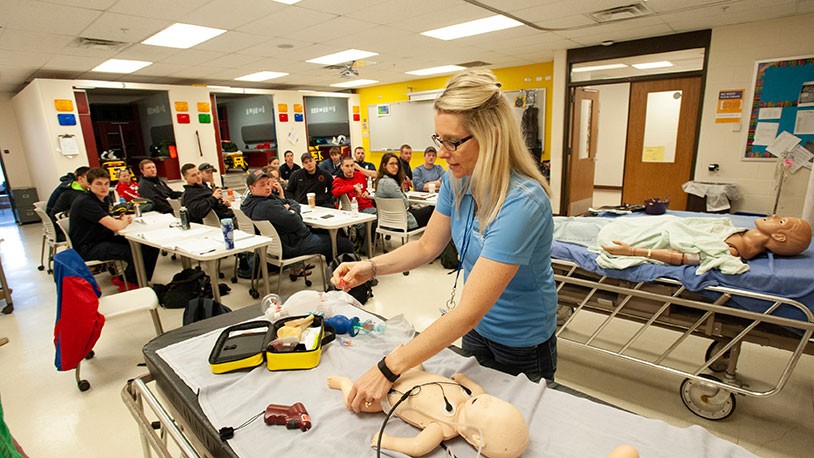
Searching for paramedic training Singapore can lead to a confusing mix of results: paramedic career pathways, EMT courses, first aid programmes, CPR and AED training, BCLS courses, and short emergency-response workshops.
These programmes can all be valuable but they are not interchangeable.
If your goal is to become a professional paramedic, you need to understand the relevant education and operational pathway. If your goal is to help protect colleagues at a workplace, industrial site, school, or event, you may need a different type of emergency medical training.
That distinction matters.
A short CPR course can teach essential lifesaving skills without being a professional paramedic qualification. Likewise, an organisation may need practical first-aid or BCLS training for designated responders rather than a full paramedic education pathway.
This guide explains the main considerations for anyone researching paramedic training in Singapore, including professional pathways, EMT-related training, first aid, CPR, BCLS, workplace preparedness, and how to select training that matches the actual role you need to perform.
Important: Course entry requirements, professional recognition, certification arrangements and career pathways can change. Always confirm current requirements directly with the relevant official institution, regulator, employer or training provider.
What Does Paramedic Training Mean in Singapore?
The phrase “paramedic training” can refer to different things depending on the searcher’s objective. For an aspiring professional paramedic, it may mean structured education and operational preparation for pre-hospital emergency care. For an employer, it may refer to training staff to respond to medical emergencies until professional help arrives.
For an event organiser, it may mean preparing event personnel to recognise an emergency and activate the correct escalation process. For an individual, it may simply mean learning practical skills such as CPR, AED use, first aid or basic cardiac life support.
These are different needs.
Professional paramedic education is not the same as a general public first aid course. Singapore’s official emergency medical services and career information demonstrate that professional paramedic pathways involve structured training and operational preparation. SCDF’s published training information, for example, describes paramedic education involving an academic phase and subsequent operational training for pre-hospital emergency care.
The first question, therefore, should not simply be:
“Which paramedic course is cheapest?”
A better question is:
What role do I need the training to prepare me for?
How to Become a Paramedic in Singapore
The route to becoming a paramedic depends on the specific employer, pathway and qualification requirements applicable at the time of application.
Singapore’s official SCDF career information includes paramedic-related career routes and structured training pathways. Its published material describes routes involving formal education, vocational preparation and operational experience.
A professional pathway may involve several components:
1. Entry requirements
The applicable requirements may include educational qualifications, medical or physical suitability criteria, driving requirements, employment conditions or other pathway-specific criteria. These requirements are not necessarily the same for every paramedic-related role.
2. Formal medical education
Professional paramedic education may include structured academic learning covering areas such as:
- anatomy and physiology
- patient assessment
- medical emergencies
- trauma care
- pharmacology
- paediatric and obstetric emergencies
- pre-hospital emergency care
- clinical decision-making
The precise curriculum depends on the programme.
3. Operational training
Paramedics must be prepared to work in environments where patients may be seriously ill or injured and where decisions must be made outside a hospital setting.
That means training may extend beyond classroom learning into:
- practical skills
- scenario-based exercises
- ambulance operations
- patient assessment
- emergency communication
- teamwork
- handover
- operational procedures
SCDF’s published training information illustrates this combination of academic and operational preparation.
4. Ongoing competency development
Emergency medical care is not a qualification that should be treated as “learn once and forget”.
Professional EMS systems involve ongoing training, assessment, recertification or competency requirements depending on the role and organisation. Singapore’s official information on private ambulance personnel also highlights the importance of proper qualifications, certification and refresher training within regulated ambulance operations.
Paramedic Course vs EMT Course vs First Aid Course
One of the most important decisions is understanding what each type of training is designed to do.
| Training type | Main objective | Typical audience |
|---|---|---|
| CPR + AED | Immediate response to cardiac arrest and use of an AED | Public, staff, security, event teams |
| First Aid | Basic management of common injuries and medical emergencies | Workplaces, schools, organisations |
| BCLS + AED | Structured cardiac life support and coordinated response | Healthcare and designated response teams |
| EMT or emergency medical responder education | More focused pre-hospital emergency response preparation | Individuals pursuing responder roles |
| Professional paramedic education | Structured preparation for professional pre-hospital emergency care | Aspiring and employed paramedics |
The boundaries between programmes depend on the course and the relevant recognition framework.
The key principle is simple:
Choose the course based on the responsibility you expect the learner to carry.
Someone who needs to perform CPR and use an AED at an office does not necessarily need the same training as someone pursuing a professional paramedic career.
Similarly, a high-risk industrial operation may require more than simply telling employees to “take a first aid course”. The organisation may need to consider its worksite hazards, emergency access, communication arrangements, escalation procedures and the availability of professional medical support.
What Does Practical Emergency Medical Training Cover?
The content varies by course, but practical emergency medical education may include several important areas.
Patient assessment
Learners may be taught how to approach a casualty safely, recognise an emergency and conduct an appropriate initial assessment within the scope of their training.
CPR and AED use
CPR and AED training focuses on recognising cardiac arrest, performing CPR and using an AED safely. Swift’s CPR + AED programme includes recognition of cardiac arrest, adult CPR techniques, AED use, scene safety, casualty assessment and practical scenarios.
Basic first aid
First-aid training may cover common emergencies such as:
- bleeding
- wounds
- burns
- fractures
- choking
- unconsciousness
- shock
- selected medical emergencies
The precise scope depends on the programme.
Team communication
Real emergencies rarely involve only one person.
Effective response may involve:
- alerting emergency services
- assigning responsibilities
- communicating casualty information
- coordinating access
- preparing for handover
- managing bystanders or workplace personnel
This is especially relevant to workplaces, industrial sites and events.
Scenario-based practice
A learner may understand the theory of CPR but still lack confidence in a stressful situation.
Practical exercises help learners practise:
- positioning
- communication
- equipment use
- team coordination
- decision-making within their training scope
Swift describes its training approach as paramedic-led, hands-on and scenario-based, with programmes designed for workplaces, events, industrial sites and individuals.
How to Choose the Right Paramedic or Emergency Medical Training
Before registering for a course, consider the following.
1. What is your end goal?
Are you trying to:
- become a professional paramedic?
- develop EMT or emergency responder skills?
- become a workplace first aider?
- learn CPR and AED use?
- support an industrial emergency-response team?
- improve event crew preparedness?
- refresh previously learned skills?
The answer will determine the appropriate training level.
2. Who is the training for?
A course for:
- a member of the public
- a corporate employee
- an HSE professional
- an event crew member
- a healthcare worker
- an industrial medical team
may have very different objectives.
3. Is the course practical?
Ask whether the programme includes:
- hands-on skills practice
- realistic scenarios
- trainer demonstrations
- equipment practice
- assessment
- opportunities to ask questions
For emergency-response training, practical experience can be particularly important because the learner may eventually need to perform skills under pressure.
4. What certification or recognition applies?
Do not assume that the word “certified” automatically means the same thing across all courses.
Before enrolling, check:
- who issues the certificate
- what the certificate represents
- whether it is accepted by your employer or intended organisation
- whether refresher training is required
- whether the programme meets a specific job or regulatory requirement
If a particular qualification is needed for employment, confirm the requirement with the employer or relevant institution.
5. Does the training match the environment?
A general classroom may not reflect the challenges of:
- a construction site
- a manufacturing facility
- a warehouse
- an offshore or remote operation
- a sports event
- a concert
- a school
- a corporate workplace
The training objective should reflect the environment in which the learner may need to respond.
Why Practical Training Matters for Singapore Workplaces and Industrial Sites
Singapore organisations operate across a wide range of environments, from offices and schools to construction sites, logistics operations, manufacturing facilities and other higher-risk workplaces.
The medical-response challenge is not always simply “Is there a first aider?”
A more useful operational question is:
What happens between the moment an incident occurs and the arrival or handover to professional medical care?
An organisation may need to consider:
- who recognises the emergency
- who calls for assistance
- how the casualty is accessed
- whether the site is difficult to navigate
- how emergency responders reach the location
- what equipment is available
- how the workplace communicates
- how the casualty is handed over
In a higher-risk environment, first-aid training may form one part of a broader emergency preparedness plan.
Professional on-site medical support may also be appropriate depending on the nature of the operation, worksite hazards and risk assessment. Swift presents industrial paramedicine and on-site medical support as a dedicated service for high-risk workplaces and industrial environments.
The important distinction is that training and professional medical coverage solve different problems. Training develops internal capability. Professional medical support provides dedicated clinical resources for situations where an organisation requires more than general employee training.
What Training May Be Suitable for Events?
Event organisers often need to think beyond the question of whether someone knows basic first aid.
A medical preparedness plan may consider:
- event size
- venue layout
- event duration
- crowd profile
- physical activities
- access routes
- weather exposure
- location
- communication arrangements
- escalation procedures
Event crew may benefit from CPR, AED or first-aid training, while the event itself may require a separate professional medical support plan.
For example:
- a small corporate gathering may prioritise trained staff and clear emergency procedures;
- a sports event may require planning around physical activity and participant injuries;
- a concert may involve crowd density, access and prolonged event duration;
- a large or higher-risk event may require dedicated professional medical coverage and ambulance standby.
The appropriate arrangement should be determined by the event’s circumstances rather than by applying one generic formula to every event. Swift’s event medical service is positioned around event medical support and ambulance standby for corporate events, sports, concerts, exhibitions and mass gatherings.
Where Do CPR, AED, BCLS and First Aid Fit?
For many people searching paramedic training Singapore, the actual need may be a practical emergency-response course rather than a professional paramedic career pathway.
CPR + AED training
Suitable for people who need to understand how to respond to suspected cardiac arrest and use an AED safely.
This may be relevant to:
- corporate employees
- security teams
- event personnel
- facilities teams
- schools
- members of the public
BCLS + AED training
A more structured cardiac-response programme may be relevant to healthcare support staff, response teams and other personnel whose roles require coordinated emergency response training.
Swift describes its BCLS + AED training as covering basic cardiac life support principles, high-performance CPR, AED safety, team coordination and medical emergency communication and handover.
Standard First Aid with CPR + AED
This may be more appropriate for organisations seeking a broader emergency-response foundation, including common injuries and selected medical emergencies alongside CPR and AED skills. Swift’s published programme covers areas such as bleeding control, wounds, fractures, burns, shock, choking, unconscious casualty care and selected medical emergencies.
The right option depends on the learner’s role, the organisation’s objectives and any applicable employer or regulatory requirements.
How Swift Ambulance Connects Paramedic Experience with Medical Education
Training is more useful when it is connected to the realities of emergency response. Swift’s training service is built around paramedic-led education for workplaces, events, industrial sites and individuals. The company presents its programmes as practical and scenario-based, with CPR + AED, BCLS + AED, and Standard First Aid with CPR + AED options.
That creates a practical connection between:
emergency medical knowledge
→ hands-on skills
→ scenario practice
→ workplace or event preparedness
For an organisation, this can be more useful than treating training as a purely administrative exercise.
The most appropriate course will still depend on the organisation’s objectives, participant roles and any applicable requirements. Training should not be presented as a substitute for professional medical care when a patient requires emergency assessment or treatment.
When Do You Need Training—and When Do You Need Professional Medical Support?
This is one of the most important decisions for organisations.
Training may be appropriate when:
- staff need basic emergency-response skills;
- the organisation wants CPR and AED awareness;
- designated personnel need first-aid training;
- an event team needs better emergency preparedness;
- a workplace wants to improve internal response capability.
Professional medical support may be appropriate when:
- the environment presents significant medical or injury risks;
- the organisation requires dedicated on-site medical personnel;
- an event needs professional medical coverage;
- a patient requires medically supervised transport;
- a workplace or event needs an ambulance standby arrangement.
These needs can sometimes exist together.
For example, a construction company may train designated employees in first aid while also arranging professional on-site medical support for a higher-risk project. An event organiser may train event personnel in CPR and AED awareness while arranging professional event medical coverage. A company may also need medical transport or evacuation support for a patient whose condition requires professional assessment and monitored transfer.
In Singapore, emergency ambulance services and medical transport services are distinct regulated service categories, and MOH advises the public to engage licensed providers appropriate to the service required.
A Practical Checklist Before Choosing a Course
Before booking a programme, ask:
- What role will the learner perform after training?
- Is the goal career development or workplace preparedness?
- Is the programme focused on CPR, first aid, BCLS, EMT skills or professional paramedicine?
- Is the course practical and hands-on?
- Who are the instructors?
- What assessment is included?
- What certificate or qualification is issued?
- Does the employer or intended organisation recognise it?
- Is refresher training relevant?
- Can the training be adapted to an industrial, event or workplace environment?
- Does the organisation need training alone, or training plus professional medical support?
These questions help prevent a common mistake: selecting a course based only on its title.
Frequently Asked Questions About Paramedic Training in Singapore
Is there a difference between paramedic training and a first-aid course?
Yes. First-aid courses generally provide foundational emergency-response skills for the intended audience and scope of the programme. Professional paramedic training is a separate career and education pathway involving more extensive preparation for pre-hospital emergency care.
Is an EMT course the same as a paramedic course?
Not necessarily. EMT and paramedic roles, qualifications and training pathways can differ by system and employer. Always check the specific programme and the role for which it prepares learners.
How long does paramedic training take in Singapore?
There is no single answer for every pathway. Programme duration depends on the specific education and operational route. Official SCDF training information describes structured paramedic training involving academic and operational components.
How much does a paramedic course cost in Singapore?
There is no universal “paramedic course fee”. Costs depend on the programme, institution, course length, qualification and funding arrangements. Compare the actual programme structure and recognition rather than price alone.
Can I become a paramedic after taking a CPR course?
A CPR course is valuable emergency-response education, but it should not automatically be assumed to be a professional paramedic qualification. If your objective is a paramedic career, investigate the applicable professional pathway.
What is the best emergency medical course for a workplace?
That depends on the workplace, risk profile and participant roles. CPR + AED, BCLS + AED or broader first-aid training may be appropriate for different objectives. Higher-risk workplaces may also need professional on-site medical support.
Is paramedic training useful for industrial companies?
Professional paramedic education is relevant to people pursuing emergency medical roles. For an industrial company, the appropriate solution may include a combination of employee first-aid training, emergency planning and professional industrial medical support, depending on operational risk.
Can event staff take first-aid or CPR training?
Yes, organisations may choose relevant first-aid, CPR or AED education for event personnel. However, staff training and professional event medical coverage are separate considerations.
Does Swift Ambulance offer paramedic training?
Swift’s published training services focus on paramedic-led CPR + AED, BCLS + AED, and Standard First Aid with CPR + AED programmes for workplaces, events, industrial sites and individuals. These are medical education and emergency-response programmes and should be evaluated according to the learner’s objective.
Final Takeaway
The phrase paramedic training Singapore covers several different search intents. If you want to pursue a professional paramedic career, research the applicable structured education and operational pathways carefully. If you need emergency-response skills for a workplace, industrial site, event or organisation, the appropriate solution may instead be CPR, AED, BCLS or first-aid training.
The key is to match the training to the responsibility. For organisations seeking practical emergency education, Swift Ambulance provides paramedic-led training programmes designed around CPR, AED, BCLS and first-aid skills for workplaces, events, industrial environments and individuals.
If your organisation needs to improve emergency readiness, the next step is to assess the role, environment and level of support required—then select training or professional medical coverage accordingly.


