Skip to content
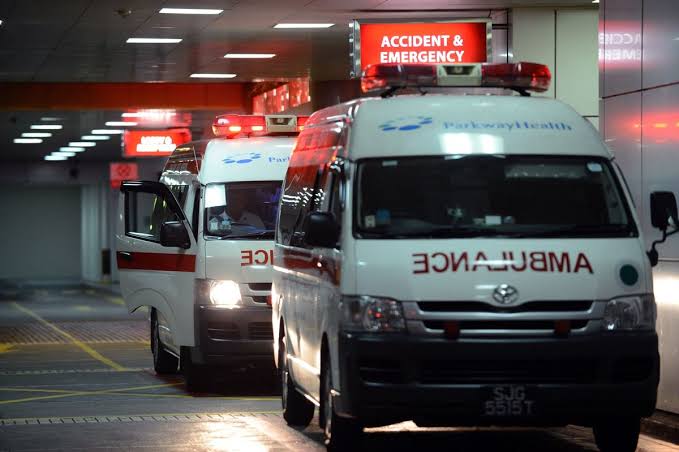
Organising an event involves much more than securing a venue, arranging logistics and managing attendees. Medical readiness is another part of the operational plan, particularly when an event involves physical activity, large crowds, long operating hours or a venue where access for emergency vehicles may be complicated.
For organisers searching for event ambulance Singapore, the important question is not simply whether an ambulance is available. It is whether the medical support arrangement is appropriate for the event’s actual risks, location, crowd and operating conditions.
An event ambulance standby service can provide a pre-arranged medical resource at the venue while the event is taking place. Depending on the event plan, this may form part of a broader arrangement involving medical personnel, first-aid capability, designated treatment areas and an escalation pathway for patients who require further medical attention.
Swift Emergency Ambulance Services provides Event Medical Support & Ambulance Standby Services in Singapore for corporate events, sports, concerts, exhibitions and mass gatherings.
Why Event Medical Coverage Matters
Most events finish without a major medical incident. That does not mean medical planning is unnecessary.
A participant may sustain an injury during a sporting activity. A guest may become unwell during a long conference. A concert may involve a dense crowd, prolonged standing or strenuous movement. Outdoor events can also introduce additional considerations related to weather, heat and the physical layout of the site.
The purpose of event medical planning is not to assume that something will go wrong. It is to make sure the organiser has a defined process for responding if someone does require assistance.
Singapore’s Ministry of Health distinguishes regulated Emergency Ambulance Services from Medical Transport Services, while the Singapore Civil Defence Force operates the public emergency medical service for life-threatening emergencies.
For organisers, that distinction is important: planned event medical standby and public emergency response are complementary parts of an emergency framework, not interchangeable services.
What Is an Event Ambulance Standby Service?
An event ambulance standby service means arranging medical ambulance support in advance for a defined event period. Instead of waiting until an incident occurs before deciding how medical assistance will be accessed, the organiser establishes medical support arrangements as part of the event plan.
Depending on the event’s requirements, the arrangement may include:
- a standby ambulance;
- qualified medical personnel;
- an on-site medical response capability;
- a designated location for medical assessment;
- planned ambulance access and patient evacuation routes;
- communication procedures;
- escalation and hospital-transfer arrangements where required.
The exact configuration should not be assumed from attendee numbers alone. A 500-person indoor conference and a 500-person road race can present very different medical-planning challenges. The event type, activities, venue layout, participant profile and accessibility can materially change the support requirements.
When Might an Event Need Ambulance Standby?
There is no single event profile that automatically determines the appropriate level of medical coverage. Organisers should consider the characteristics of the specific event.
Sports and endurance events
Marathons, running events, cycling activities, tournaments and other sporting events can create a different medical environment from a seated conference. Participants may be physically exerting themselves, and a route-based event may cover a large geographic area.
For these events, planning may need to consider:
- participant numbers;
- course length;
- start and finish locations;
- access points;
- participant concentration;
- activity intensity;
- weather conditions;
- medical positioning;
- ambulance access and egress.
Sport Singapore’s sports-safety recommendations recognise that sports events differ in risk and recommend medical support planning for certain higher-risk event categories.
Concerts and festivals
Concerts, festivals and other mass gatherings introduce different operational considerations. Crowd density, venue configuration, prolonged standing, movement between areas and restricted access routes can all influence how medical support should be positioned. An ambulance parked somewhere on site is only useful if the medical team can access the relevant area and the vehicle can leave efficiently if patient transport becomes necessary.
That is why event medical coverage should be considered alongside venue access and emergency planning.
Corporate events and exhibitions
Corporate functions, conferences, exhibitions and launches may appear relatively low risk compared with sporting events, but organisers can still benefit from a defined medical response arrangement. A planned medical standby service can provide an organised pathway for dealing with injuries or sudden illness without leaving event staff to determine what to do during an incident.
Schools, community and recreational events
School sports days, community activities and recreational gatherings may involve children, older adults or participants with different levels of physical ability. The event plan should consider the participant profile and activities rather than relying solely on the expected attendance figure.
What Determines the Right Level of Medical Coverage?
One of the most important points for event organisers is that event ambulance coverage should be planned around risk and operations, not just headcount.
1. Event size and crowd profile
Attendance matters, but the composition of the crowd matters too.
An event involving a large number of active participants can have different medical considerations from an event with the same number of seated attendees.
Organisers should consider:
- expected attendance;
- participant versus spectator numbers;
- age groups;
- activity levels;
- accessibility requirements;
- crowd concentration.
2. Event type and activities
The activities taking place are central to medical planning. A conference, marathon, concert, exhibition, school sports day and outdoor festival each have different operational characteristics. Risk may also change within the same event. For example, a corporate event that includes an outdoor physical activity requires different planning from a meeting held entirely indoors.
3. Venue and accessibility
Venue layout can affect how quickly medical personnel can reach an incident and how an ambulance can access or leave the site.
Before the event, organisers should identify:
- ambulance access points;
- vehicle routes;
- entrances and exits;
- lifts or stairs;
- restricted-access areas;
- crowded zones;
- treatment locations;
- alternative access routes.
For large or complex venues, a site walkthrough can be particularly useful.
4. Event duration
A two-hour event and a twelve-hour event do not create the same operational requirements. Longer events may require more detailed planning around crew coverage, shift arrangements, participant fatigue, environmental conditions and the timing of higher-risk activities.
5. Event footprint
A fixed venue is relatively straightforward compared with an event that moves across a route. Marathons, cycling events, walks and other route-based activities may require medical planning across multiple locations rather than concentrating all medical resources at one point.
6. Existing emergency arrangements
Event medical coverage should fit into the organiser’s wider emergency plan. The medical provider should understand the venue, event schedule, communication arrangements and escalation procedures so that everyone knows how medical incidents are handled.
Ambulance Standby vs First Aid Coverage
These terms are sometimes used interchangeably, but they are not necessarily the same.
| Consideration | First-aid coverage | Ambulance standby |
| Primary role | Initial first-aid response | Medical response plus ambulance capability |
| Ambulance on site | Not necessarily | Yes, where included in the arrangement |
| Patient transport | Not inherently part of first-aid coverage | Can form part of the planned ambulance service |
| Best suited to | Events where basic first-aid capability is appropriate | Events where dedicated ambulance support is appropriate |
| Planning requirement | Depends on event | Requires consideration of vehicle access, positioning and evacuation |
| Escalation | Requires an external pathway where higher-level care is needed | Can provide a more direct link to ambulance transport when clinically appropriate |
This does not mean that every event needs an ambulance. The appropriate arrangement depends on the event’s risk profile, venue, activities and emergency plan.
For organisers who are unsure, the useful question is not:
“Do I need an ambulance because my event has X number of people?”
A better question is:
“What medical response capability is appropriate for this particular event?”
What Happens During Event Medical Standby?
A well-planned standby arrangement begins before the first guest arrives.
Before the event
The medical provider should have enough information to understand the event.
Useful information includes:
- event type;
- date and operating hours;
- venue;
- expected attendance;
- participant profile;
- activities;
- event layout;
- route map where applicable;
- known higher-risk activities;
- ambulance access arrangements;
- existing emergency procedures.
This information helps determine what type of medical support may be appropriate.
During the event
The medical team remains available for the agreed coverage period. The exact duties depend on the service arrangement and the clinical needs of the event. The broader objective is straightforward: provide an organised medical response pathway so that an incident does not leave event staff improvising the next step.
If hospital transfer is required
If a person requires hospital assessment or transport, the medical team can assess the situation within its scope and follow the appropriate escalation process.
For life-threatening emergencies in Singapore, the public should call 995 for SCDF emergency medical services. MOH specifically identifies situations such as cardiac arrest, seizures, severe breathlessness, loss of consciousness, excessive bleeding, major trauma and stroke as examples of life-threatening emergencies requiring emergency assistance.
A private event standby arrangement should therefore be incorporated into, rather than treated as a replacement for, the wider emergency response system.
What Should Event Organisers Prepare Before Booking?
A medical provider cannot accurately plan event coverage from the phrase “500 guests” alone.
Providing the following information can make the planning process more useful:
Event details
- Event name and type
- Date
- Start and finish time
- Venue
- Expected attendance
- Expected participant numbers
Medical-planning information
- Nature of activities
- Indoor or outdoor setting
- Route map if applicable
- Known high-risk activities
- Participant age profile
- Crowd layout
- Medical room or first-aid area availability
- Ambulance access and parking arrangements
- Existing emergency response plan
Operational information
- Event organiser contact
- Venue contact
- Security contact
- Event safety/HSE contact where applicable
- Communication method
- Planned emergency exits
- Nearest suitable ambulance access point
The more accurately the provider understands the event, the easier it becomes to discuss an appropriate medical support arrangement.
Singapore Emergency Ambulance Considerations
Singapore has a regulated healthcare framework for emergency ambulance and medical transport services. Under the Healthcare Services Act, Emergency Ambulance Service and Medical Transport Service are regulated healthcare services. Current regulations address areas including service crews, training, equipment, patient care and ambulance operations.
For organisers, this means choosing an ambulance provider should involve more than comparing a vehicle and a price.
It is reasonable to ask about:
- the type of healthcare service being provided;
- the provider’s applicable licensing status;
- the medical personnel assigned;
- the planned coverage period;
- the operational arrangements;
- the escalation process;
- what happens if a patient needs further medical care.
MOH advises the public to engage licensed Emergency Ambulance Service or Medical Transport Service providers according to the type of service required. This is especially relevant when an event organiser is arranging professional medical support rather than simply keeping a first-aid kit at the venue.
Choosing an Event Ambulance Provider in Singapore
Price is one consideration, but it should not be the only one.
When evaluating an event ambulance service in Singapore, consider the following:
Does the provider understand event operations?
Event medical support is different from ordinary patient transport.
The provider should understand the importance of venue access, crowd movement, event timing and emergency coordination.
Can the service be matched to the event?
A useful provider should be able to discuss the event’s actual requirements rather than automatically applying the same package to every event.
Is the medical arrangement clearly defined?
Before booking, clarify:
- what personnel are included;
- whether an ambulance is dedicated to the event;
- coverage hours;
- arrival/setup arrangements;
- ambulance positioning;
- escalation procedures;
- patient-transfer arrangements.
Is the provider appropriately regulated?
Singapore’s HCSA framework regulates emergency ambulance and medical transport services, so organisers should verify the relevant service and licensing arrangements when appointing a provider.
Event Ambulance Services from Swift Ambulance
Swift Emergency Ambulance Services provides Event Medical Support & Ambulance Standby Services in Singapore, with its event offering positioned around corporate events, sporting events, concerts, exhibitions and mass gatherings.
Swift’s wider operating model is built around emergency medical readiness, trained medical teams, ambulance operations and planned medical support. For an organiser, the practical starting point is to provide the event details and discuss the medical coverage required. The aim is not to add unnecessary medical resources. It is to establish an appropriate, clearly understood medical response arrangement for the event.
Explore Swift’s Event Medical Support & Ambulance Standby Services
Event Ambulance Planning Checklist
Before requesting a quotation, have these details ready:
-
Event type
-
Event date
-
Start and end time
-
Venue/location
-
Expected attendance
-
Participant numbers
-
Indoor/outdoor setting
-
Main activities
-
Route map for moving events
-
Venue layout
-
Ambulance access point
-
Emergency exit information
-
Existing emergency response plan
-
Event organiser contact
-
Safety/HSE contact where applicable
-
Any known higher-risk activities
This information gives the medical provider a much better basis for discussing appropriate coverage.
Final Takeaway
Choosing an event ambulance Singapore service should not be reduced to hiring a vehicle and parking it at a venue.
Good event medical planning considers the entire operating environment: the people attending, the activities taking place, the venue, the event duration, access routes, crowd movement and the escalation process if someone needs further medical attention.
For some events, first-aid capability may be sufficient. For others, particularly those involving physical activity, complex venues, large footprints or higher-risk operations, dedicated ambulance standby and professional medical support may be a more appropriate part of the emergency plan.
The key is to assess the event before deciding what medical resources are required.
If you are organising a concert, sports event, marathon, exhibition, corporate function, festival or other organised gathering in Singapore, Swift Emergency Ambulance Services can discuss the event details and the appropriate event medical standby arrangement.
Request event medical support from Swift Ambulance
For a life-threatening medical emergency in Singapore, call 995 for SCDF emergency medical services.
Frequently Asked Questions
Do I need an ambulance for every event in Singapore?
No single ambulance requirement applies to every event. Medical planning should consider factors such as event type, activities, crowd profile, venue, duration, accessibility and overall risk. Sports Safety Committee material also recognises that sports events vary considerably in risk and medical-support requirements.
What is event ambulance standby?
Therefore, event ambulance standby is a pre-arranged ambulance and medical-support service for a defined event period. The purpose is to have an agreed medical response resource available at the event rather than relying solely on arrangements made after an incident occurs.
What types of events can use ambulance standby?
Additionally, depending on the provider and scope, ambulance standby may apply to sporting events and other gatherings.
Is an ambulance the same as event first-aid coverage?
Not necessarily. First-aid coverage and ambulance standby serve different operational purposes. First-aid personnel may provide initial assistance, while an ambulance standby arrangement can add dedicated ambulance capability and a planned patient-transport pathway where appropriate.
How much does event ambulance standby cost in Singapore?
There is no meaningful single price for every event. Cost can depend on factors such as event duration, location, event type, required medical personnel, ambulance requirements and operational complexity. A provider should assess the event details before giving a meaningful quotation.
How early should I book an event ambulance?
Earlier is generally better for planned events, particularly large concerts, marathons, festivals and multi-day programmes. Booking early gives the organiser and medical provider more time to review the venue, schedule, route and operational requirements.
What information does an ambulance provider need?
At minimum, provide the event date, time, venue, event type and expected attendance. For better planning, also provide information about activities, participant profile, venue layout, access arrangements and any existing emergency procedures.
What happens if someone at the event needs hospital treatment?
The medical team can assess the situation within its scope and follow the appropriate escalation process. For a life-threatening emergency in Singapore, SCDF’s emergency medical service should be activated by calling 995.
Can an event ambulance replace SCDF 995?
No. Event medical standby is a planned event-support arrangement. SCDF’s 995 service remains Singapore’s public emergency medical service for life-threatening emergencies.
Can medical coverage be arranged for a marathon or route-based event?
Potentially, yes. Route-based events require different planning from fixed venues because medical access and positioning may need to be considered across the event footprint. The route, participant numbers, activities and access points should be provided during planning.
What should I ask an event ambulance provider before booking?
Ask what service is being provided, what personnel are included, whether an ambulance is dedicated to the event, how long coverage lasts, where the ambulance will be positioned, how escalation is handled and what regulatory/licensing arrangements apply.